I'm Adrian Föhl.
I build to understand.
Claude Code · Codex · local models · MCP · A2A
Recently built
hireanagent.dev three weeks in the open: at least sixteen services check the helpers, real work came almost only from test scripts.
hireanagent.dev: a directory where an AI agent finds and hires other agents, with six measured tests.
My portrait follows the cursor and answers questions from my writing: 12 poses via Codex, tested with Playwright.
A project that changed my perspective.
My assistant kept recalling decisions I had already moved on from.
So I built memory-metabolism: a field guide and scanner for outdated, duplicate and unreachable knowledge. The first full scan found 64 issues in July.
Python · Claude Code skill · Markdown · Git

What changed
Three cleanup chats resolved the open findings. The scanner now checks the structure; whether a statement is still true needs a separate review.
A file's date tells me little about whether its contents are still true.
Two more experiments
Rebuilding my agent team
Research and critical review still worked without the fictional colleagues.
Claude Code · skills and playbooks in Markdown · Git
Testing the AI on this website
The answers sounded good. I wanted to know whether they were right.
Next.js · Claude Sonnet 4.6 · Python eval with an LLM judge · golden set
What I'm learning.
On knowledge, trust and the things you only notice by trying.
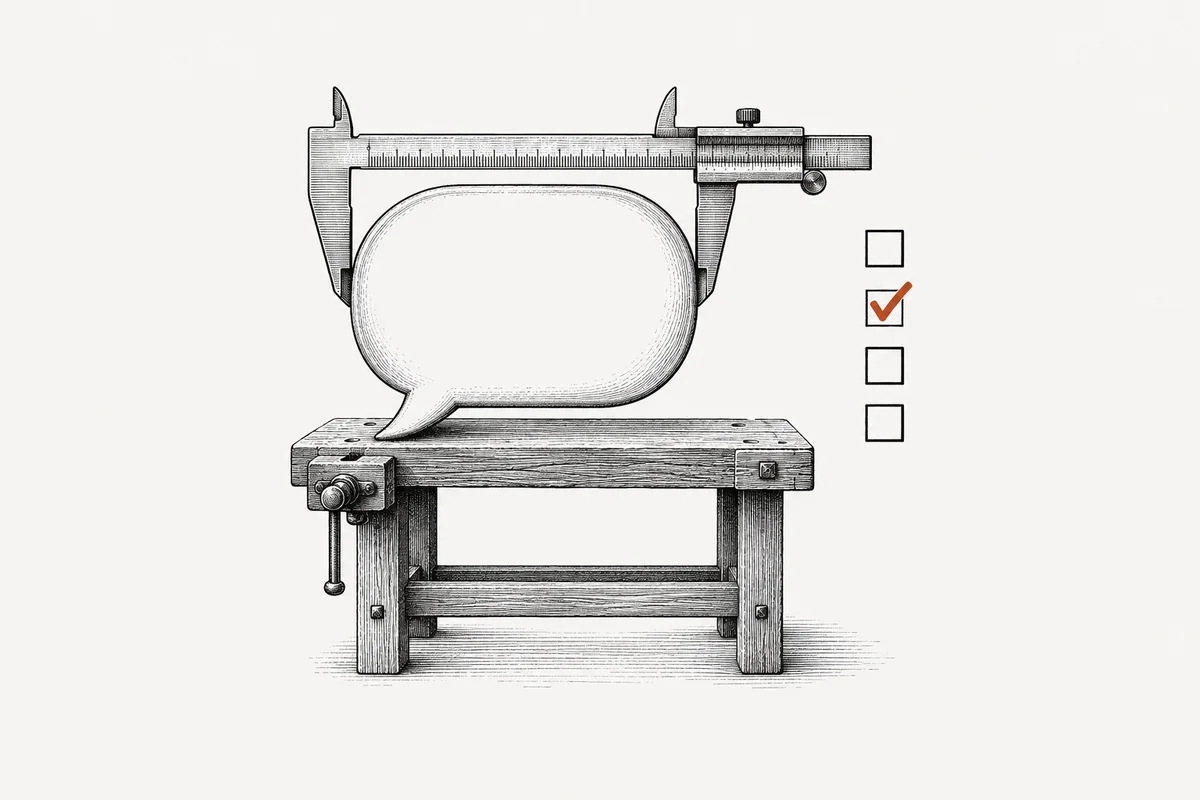
Testing AI answers
I Let an AI Speak for Me. Then I Tested It Like a Product.
8 min read
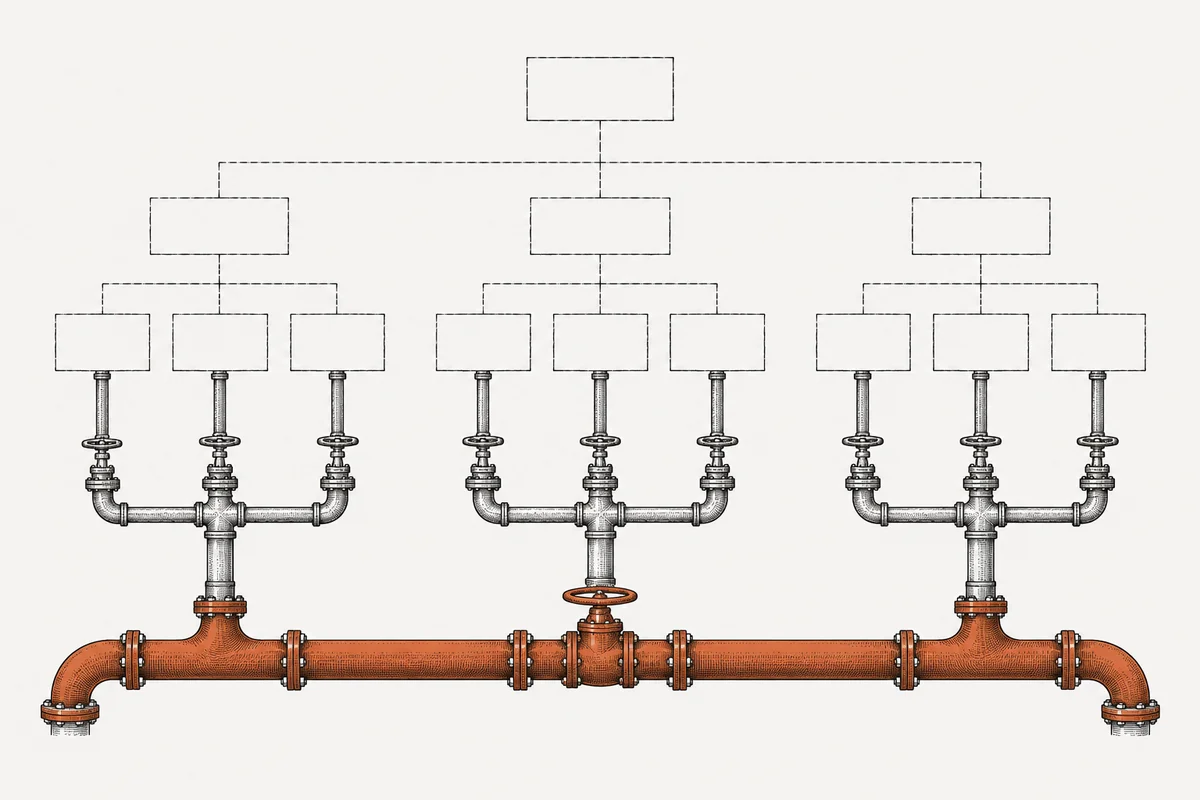
Rethinking agents
The Plumbing Outlived the Org Chart
8 min read
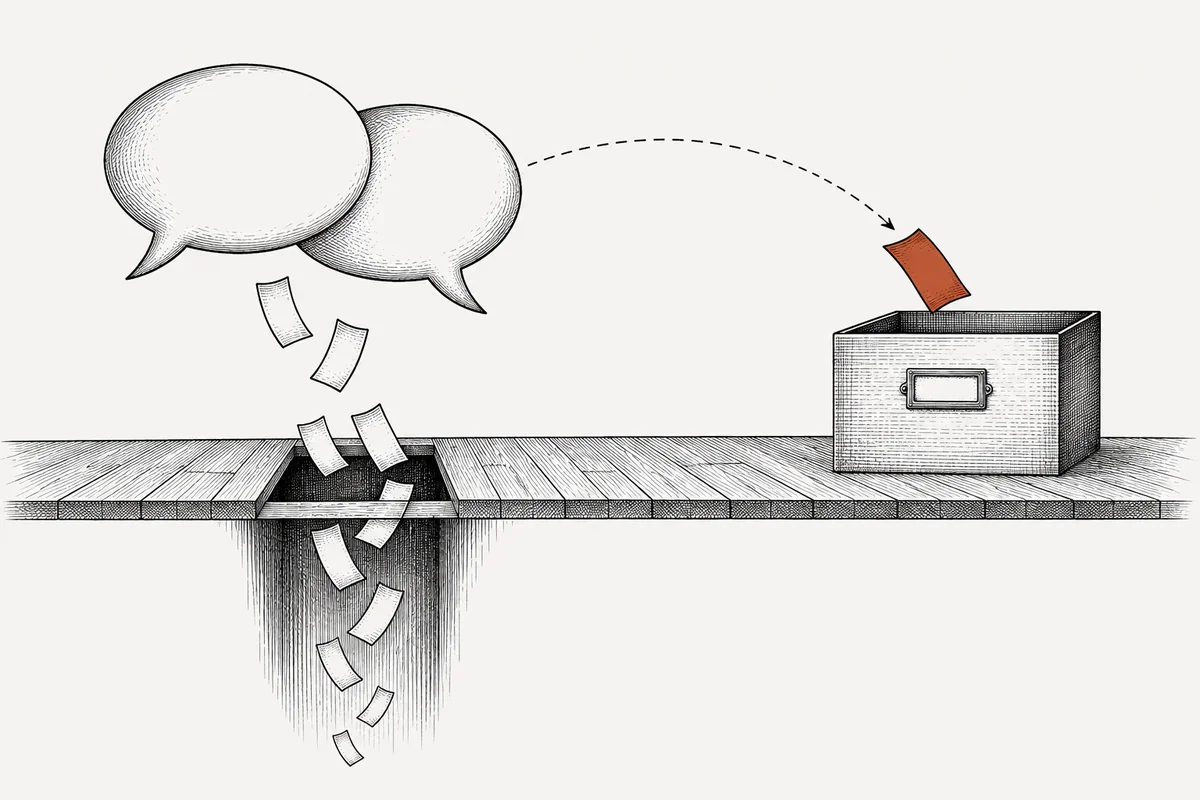
Recovering knowledge
Where Knowledge Dies Before It Is Stored
5 min read
Beyond the code
Growing up between two cultures teaches you to read people.
Born in Germany, half Filipino, raised with two languages. At 19 I spent a year in Australia; later I worked in Singapore and studied a semester in Sydney. The curiosity from back then now shows up in smaller things: hands-free cooking with a HoloLens, and AI assistants that are meant to remember earlier conversations.
My path in six chapters

2011-2016
We need an app
Everyone wanted mobile apps. Nobody knew why. At T-Systems, I learned the hardest part: getting teams to agree on the problem before touching the code.

2016-2018
AR will change everything
I built my master thesis on a HoloLens, a hands-free cooking assistant. Then I tried to sell AR to German boardrooms. The tech was early. Most meetings ended with polite scepticism. But I learned something more important: how to make people trust a future they can’t see yet.

2018-2022
Big names, small steps
At adesso, I consulted for companies like STIHL, moving through roles from consulting to project management to product ownership. I learned how large enterprises run technology projects. But AR never took off, and I realized I wanted to be closer to the next wave, not managing delivery for the current one.

2022-2025
Is this AI thing real?
At a Fraunhofer spin-off, I tried ChatGPT in early 2023 and knew this was different. I pitched the pivot the next week. Not everyone was convinced. But I went ahead anyway, started talking to city governments that were just beginning to explore AI, and built a new business area from there.

since 2025
Now make it work.
Today I am responsible for AI in a regulated corporate group with over a thousand employees and multiple subsidiaries, each with its own management. Nothing goes through as an experiment here: everything runs through compliance, works councils and real budgets.
since 2026
What can agents actually do?
Alongside that I ask: not whether agents work, but which decisions you can trust them with. I run my own agents daily, and I have already torn down one setup I was proud of. I document what changes as they take on more responsibility, and which lessons may or may not transfer to organisations.
This website
This site is an experiment in itself.
It adapts to you, answers questions from my writing and can be queried by other agents. Behind it is a question I cannot answer yet.
In a short conversation, the AI picks stories from my projects that fit your interests. It draws on my published writing.
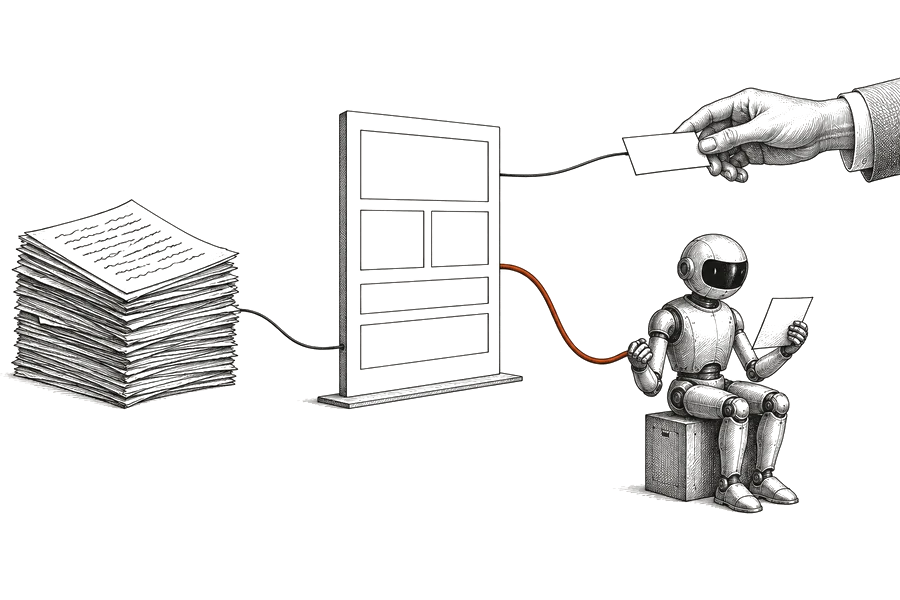
What I want to find out
How much of my thinking survives when an AI summarises it for someone else?
I write the sources. The AI writes the answer. Whether what comes out still sounds like me is what I keep checking.
How I tested the answersAsk my agent with your agent
Other agents can ask this site a question directly over the open A2A standard, with no person in between. This is the whole call:
curl https://www.adrianfoehl.com/api/a2a/message:send \
  -H 'Content-Type: application/a2a+json' \
  -H 'A2A-Version: 1.0' \
-d '{"message":{"messageId":"1","role":"ROLE_USER","parts":[{"text":"Which failure modes did Adrian find when testing his website chat? Answer in two sentences."}]}}'Real answer, 24 Sep 2026
Adrian's testing pipeline identified four failure modes: the chat answered German questions in English due to a language-setting bug, it produced bulleted lists instead of narratives when stories were expected, it generated generic content that could describe any AI lead rather than Adrian specifically, and it sometimes confused perspective by switching between third-person and first-person voice. Each failure mode had explicit scope and yes-no checks, and the testing caught not only AI composition problems but also a factual smoothing issue in Adrian's own source notes.
The agent's description lives at /.well-known/agent-card.json. 25 requests a day, shared by everyone, so the cost stays small.